Laboratory for Cell Culture Technology and Biotransformations
Email: marina.cvjetko.bubalo@pbf.unizg.hr
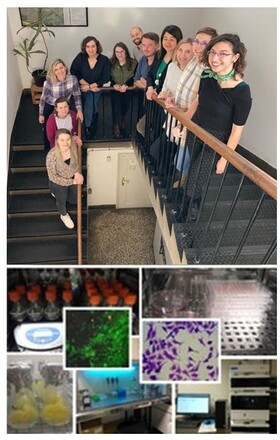 The Laboratory was established in 1960 within the "Department of Organic Chemistry with Technology" of the then Food Technology Section of the Faculty of Technology, University of Zagreb, under the name "Laboratory for Chemistry and Technology of Vitamins and Hormones". Since 1980, it has been part of the "Department of Biochemical Engineering of the Faculty of Food Technology and Biotechnology, University of Zagreb". Expanding its scope of activities, in 1996 the Laboratory was renamed the Laboratory for Cell Technology and Biotransformations.
At the time of its establishment, the scientific activity within the Laboratory took place in the field of synthesis of intermediates and derivatives of various vitamins. Since 1987, scientific research has expanded to the field of synthesis and metabolism of steroid and gonadal hormones, research into the biological activity of natural plant secondary metabolites (glucosinolates and polyphenols), biocatalysis of pure enantiomeric compounds, research into the activity of natural heterocyclic compounds, and the effects of xenobiotics, especially environmental pesticides, on reproductive functions. A particularly important aspect was equipping the laboratory for the cultivation of animal cell cultures. This initiated research related to the development and application of animal cell technology in the production of viral vaccines in several types of bioreactors. In doing so, significant expertise was gained in working with suspension and (immobilized) adherent cells. Research into the effects of environmental substances, both natural and contaminants, also constitutes a significant part of the laboratory's research work.
Scientific Research Activities of the Laboratory
Current research in the laboratory is conducted in two directions:
1. Development of cultivation conditions for technologically significant animal cell lines in the production of recombinant proteins. The largest part of the research is devoted to the development of cell culture media composition by adding substances isolated from natural sources. The current research emphasis is on testing protein hydrolysates from plant raw materials that are added to the culture medium as a substitute for standardly used proteins of animal origin. Concurrently, the biological activity of protein hydrolysates as well as the in vitro cytotoxicity of various natural and synthetic compounds are also being investigated.
2. In cooperation with several institutions, the research team is intensively engaged in the preparation, characterization and implementation of natural deep eutectic solvents (NADES) in food technology, biotechnology and chemical technology. The level of expertise is evidenced by the fact that the research group has published more than 20 scientific papers in high-impact factor journals on this research. The acquired knowledge and experience have prompted us to also offer the service of preparation and characterization of these solvents, as well as support in the development of environmentally friendly technologies using NADES.
Links to research project websites: