Laboratory for Sustainable Development
Email: anet.rezek.jambrak@pbf.unizg.hr
The Laboratory was established on October 29, 2019, at the 1st regular session of the Faculty Council for the academic year 2019/2020. 
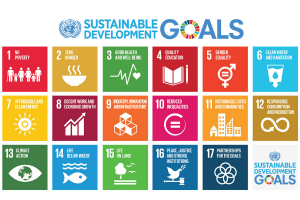

https://www.un.org/sustainabledevelopment/development-agenda/
Member of Catalyst2030
Catalyst 2030 – Collaborating to Achieve the SDGs
Knowledge-driven actions: Transforming higher education for global sustainability Independent Expert Group on the Universities and the 2030 Agenda
https://unesdoc.unesco.org/ark:/48223/pf0000380519/PDF/380519eng.pdf.multi
Purpose: The purpose of establishing the aforementioned Laboratory arose from the real need to structure and accelerate the development of research activities and education in the specific professional/scientific field that the Laboratory would possess and develop. The fundamental orientation of the proposed reorganization is to ensure a more appropriate connection of related teaching and scientific-research tasks into an optimal organizational form in order to eliminate the weaknesses and shortcomings of the existing structure, i.e., to prepare it for more successful operation and achieving higher quality results.
Sustainable development, inaugurated by a series of national strategic documents, and particularly emphasized by the acquis communautaire of the European Union, of which the Republic of Croatia is a member, requires the application of sustainable development principles, process management, public communication, and the development of a new value system in which the relationship with the environment occupies a significant place. The real need for the establishment of such a Laboratory also arises from the strong support of national and international stakeholders in areas relevant to the Laboratory's scope of activities. Therefore, the main goal of establishing the Laboratory is to align the relevant scientific-educational and research activities of the Republic of Croatia and the Faculty of Food Technology and Biotechnology with those of developed countries of the European Union and the rest of the world, thereby directly enabling the achievement of goals and standards defined at the level of the University of Zagreb and the Faculty.
The establishment of such a Laboratory is fully supported by the Strategies of the University of Zagreb, especially:
„Strategy of Internationalization of the University of Zagreb 2014–2025“ and „Strategy of Research, Technology Transfer and Innovation“.
The main strategic goal of the „Strategy of Research, Technology Transfer and Innovation“ is to encourage scientific excellence, innovation, collaboration and a multidisciplinary approach to research in various fields and technologies, and to ensure the long-term recognizability and reputation of the University of Zagreb in the European environment. Furthermore, the goal is to contribute to the sustainable development of the Croatian economy and society as a whole, which would happen faster and more efficiently with the establishment of such an interdisciplinary Laboratory.
The „Strategy of Internationalization of the University of Zagreb 2014–2025“ emphasizes that the intensity of cooperation with foreign universities and other research institutions is not satisfactory, and that it is necessary to work on the development and application of effective mechanisms to encourage inter-institutional cooperation, whether in research or education, which would achieve better international visibility of the University. The Strategic Development Plan of the Faculty of Food Technology and Biotechnology 2013-2018 also states that the Faculty will be recognized as a component of the University of Zagreb with a clear research profile characterized by research excellence recognized at the international level, and that interdisciplinary research and collaboration among researchers from different scientific fields will be encouraged. Furthermore, according to the „Development Strategy of the Faculty of Food Technology and Biotechnology, University of Zagreb, 2019–2025“, it is stated:
„Research results have led to the international recognition of the Faculty as a center of scientific research excellence in this scientific field. The Faculty is recognized as a higher education institution with a clear research profile characterized by research excellence recognized at the international level. Through research-based teaching, future drivers of scientific development and overall social development are educated. By creating new ideas and technological solutions, critical thinking and creativity, the Faculty is a key driver of the economy and sustainable development in the field of biotechnical sciences in the Republic of Croatia.“
Goal 1 (research strategy): Maintain a high level, quality and relevance of scientific activity, as well as interdisciplinarity and collaboration in scientific production (the Laboratory has a distinctly interdisciplinary character). The mission of the Faculty in the field of scientific research activity is to conduct scientific, fundamental and development research in the interdisciplinary scientific fields of food technology, biotechnology and nutrition science, as well as other related scientific disciplines. The Laboratory for Sustainable Development has excellently integrated into the Mission of the Faculty, through collaboration in interdisciplinary scientific fields.
According to the Vision of the Faculty:
„The Faculty of Food Technology and Biotechnology, University of Zagreb, will be recognized as a higher education institution with a clear and unique research profile characterized by research excellence recognized at the international level, as a higher education institution also characterized by excellence in education in the field of food technology, biotechnology and nutrition science, and as a recognizable partner in the sustainable development of science and technology, the economy and society as a whole.“
Focus: The primary focus of the Laboratory is directed towards aligning the curriculum with strategies based on sustainability and sustainable development in food technology, biotechnology and nutrition science, thereby enabling the integration of research results and findings into teaching, especially at the graduate and doctoral levels. Furthermore, the structure of such a Laboratory enables the positioning of the Faculty as a leading educational institution in the Republic of Croatia and beyond, and will highlight education, research and development in accordance with the guidelines of the United Nations; i.e., the guidelines of the „Agenda for Sustainable Development 2030“.
Role and tasks of the Laboratory: The Laboratory participates in educating students about sustainability concepts, processes and production technologies, and sustainability components in food technology, biotechnology and nutrition science. Scientific research activities and projects within future collaborations include sustainability components in close connection with industries from the Republic of Croatia, the EU and the world, with the aim of ensuring sustainability and sustainable development. Given that there is currently no such Laboratory in higher education in the Republic of Croatia, its establishment has highlighted a very important component of future sustainable development, as well as its own role as a leader in the field of sustainability in food technology, biotechnology and nutrition science in the Republic of Croatia and beyond.
The scope of work of the Laboratory for Sustainable Development includes biotechnical sciences and relevant interdisciplinary sciences. Sustainable development is a topic of national and international scientific programs and requires the harmonization of many issues. Above all, it requires the rapid implementation of improvements in „eco-efficiency“ and energy efficiency. Furthermore, it is necessary to identify a wide range of (useful) natural materials while minimizing waste generation, as stated in the LCA guide, 1997, which builds upon the long-term international interest in so-called „cleaner technology“ and sustainable development required to improve „eco-efficiency“ through the life cycle of a particular product or system.
Experience and previous work in the field of non-thermal (sustainable) processing techniques:
http://www.researchgate.net/profile/Anet_Reek_Jambrak
http://www.scopus.com/authid/detail.url?authorId=56703576700
http://scholar.google.hr/citations?user=xlCcR2gAAAAJ&hl=hr&oi=ao
The role and importance of the Laboratory for students of the Faculty is to provide education on the basic concepts of sustainability in food technology, biotechnology and nutrition science, thereby modernizing their preparation for the competitive EU labor market which requires experts educated on the foundations of eco-efficiency.
The strategy and vision of the Laboratory's work includes the implementation of teaching through the course Sustainability of Advanced Food Processing Techniques and the course Industry 4.0 in Biosciences, with a possible future course Sustainability in Biosciences. Teaching will be conducted in Croatian and English, thus enabling teaching for international students as well. The extensive international and domestic teaching experience of the Laboratory members will significantly assist in this. This will enable better positioning of the Faculty component at the University through the internationalization of education and new competitive study directions.
The work of the Laboratory is focused on providing support for the application of development and research projects at the Faculty, future European and national projects, where it is necessary to highlight the necessary sustainability component. The Laboratory will promote sustainability through the application and implementation of international projects in cooperation with recognized experts and scientists from around the world, active student participation in the scientific research activities of the Laboratory, and the publication of results arising from research. Public promotion of the Laboratory will also be achieved through the Laboratory's website in Croatian and English.
By participating in teaching modules and research activities of the Laboratory, Faculty students will:
(i) gain knowledge about the energy and environmental characteristics and application of advanced thermal and non-thermal sustainable processing techniques in biosciences and be able to critically assess the advantages and disadvantages of individual techniques; an economic perspective and sustainability analysis will also be available.
(ii) learn what the concept of processing sustainability in food technology and biotechnology means; learn the legal regulations related to the use/characterization of sustainable techniques; be able to implement the results of laboratory research in industrial practice.
(iii) master the use of sustainable techniques as a tool for processing by-products (waste) from the agro-food industry.
(iv) assess the acceptability of products obtained by sustainable (bio)technologies by consumers; using software for „sustainability“ analysis using life cycle assessment (LCA), Quality Function Deployment, etc.).
(v) have the opportunity for direct communication with international and domestic experts/scientists who have expertise related to the use of advanced techniques in sustainable development.
(vi) acquire basic knowledge about the concepts of Industry 4.0 (Internet of Things - IoT, big data, 3D printing, etc.)
Additive techniques - 3D printer - Byflow - available in the Laboratory for Sustainable Development (https://www.3dbyflow.com/)
Through the Laboratory's activities, physical and molecular changes in products manufactured through low-energy processes, the effects of processing in food technology and biotechnology on the environment, the microbiological safety of products through sustainability, and others are also investigated. Special emphasis is placed on the use of sustainable techniques in food technologies, fermentation, biotechnological processes, by-product processing, etc.
Students and employees will be able to apply the aforementioned knowledge through projects at the national and EU level, and beyond. Knowledge and skills will include the application of the latest research results and the application of sustainable techniques in (industrial) practice, the possibility of implementing sustainable techniques in existing plants in the food processing industry and biotechnology, optimizing and designing processing plans and process parameters. Furthermore, knowledge will be gained for selecting the best technique for their own research (or for industrial purposes), and implementing the acquired knowledge with respect to energy consumption for individual processes.
It is certainly worth emphasizing that students and researchers will independently apply tools and methods used in sustainability assessments, which is essential today for understanding processes and technologies in food technology and biotechnology in order to ensure the strategic development of companies, product development and improvement of production systems, and good marketing placement. In addition to the already standard methodology of analyses, tools and concepts such as: „Quality function deployment, Green technology, Clean label, Clean processing and production, Carbon, waste and water footprint and Zero waste“, it is certainly worth highlighting the Life Cycle Assessment (LCA), a vital and powerful tool that includes the assessment of the overall impact on the environment, while simultaneously complementing other, equally necessary methods and processes to effectively and efficiently maintain consumption and production.
„Clean label, Clean processing and production“ is a very important concept that is not regulated in the Republic of Croatia, and the work of the Laboratory will be focused on defining and implementing these concepts in food technology, biotechnology and nutrition science.
So far, LCA has most often been used to assess the environmental impact of specific products and industrial processes. Nevertheless, there is a growing number of studies emphasizing the application of LCA in the agricultural, food and biotechnological production sector, which is in line with the Global Sustainable Development Goals by 2030 (The 2030 Agenda for Sustainable Development, https://sustainabledevelopment.un.org/?menu=1300), adopted by the UN in 2015. The importance of Agenda 2030 has also been recognized by the President of the Republic of Croatia, Kolinda Grabar Kitarović, who strongly supports the establishment of this Laboratory because at the „Summit on Sustainable Development after 2015“, within the 70th UN General Assembly, she stated:
„The seventeen Sustainable Development Goals are not just another chapter in the bureaucratic procedure of the United Nations. This is a plan, a program for our development for the next 15 years and beyond, it is a framework and a tool for our better future. Transforming our world - that is not a phrase, it is an obligation for all of us.“
https://sustainabledevelopment.un.org
The role and importance of the Laboratory for the industry of the Republic of Croatia will primarily be reflected in the improvement of industrial production competitiveness. Sustainable processing techniques are today considered commonly applied in developed countries and their industries. This is because consumers in developed country markets, which are of strategic interest to the industry in the Republic of Croatia, demand high food quality and safety with minimal harmful impact on the environment.
Along with the increase in environmental and generally responsible social awareness of consumers, in the future even more attention will be directed towards the choice of food products while meeting environmental and ethical production criteria. Therefore, it is essential to assess all harmful impacts of production processes, raw material exploitation and distribution systems on the environment for the purpose of sustainable development, economic competitiveness, etc.
Through its work, the Laboratory cooperates with recognized experts from the country and abroad, whether from higher education and science institutions or from the economy and the real sector, which is in accordance with the development strategy of the Republic of Croatia („Development Strategy – Croatia in the 21st Century (2002)“) which defines four main strategic goals for further development (Sustainable Development Strategy of the Republic of Croatia):
1. Achieving economic development and citizen welfare with balanced regional development,
2. Integration into European economic integrations,
3. Raising the quality of human capital by investing in education and science, increasing the quality of life, stopping negative demographic trends,
4. Preserving national security through technological modernization and investments in defense and security (NATO).
Starting from the analysis of the situation and vision of a sustainable and functional waste management system, while taking into account the strategic goals of the development of the Republic of Croatia and the goals of the National Environmental Protection Strategy, strategic goals have been defined whose achievement guarantees the strengthening of the system and its functioning in such a way that the basic function is achieved, i.e., the protection of human health and the environment and the rational use of resources. To gradually reduce waste pressures on the environment and human health and achieve sustainability, conditions must be created that will:
(1) reduce waste generation, leading to better resource use and protection,
(2) reduce the quantities that are disposed of (or irresponsibly discarded), and
(3) reduce the risks from waste. All of the above is in accordance with the Laboratory's work strategy, which also includes education on strategic waste management goals, namely:
Avoiding generation and reducing the amount of waste during processing and treatment in food technology and biotechnology;
Reducing the risk of waste during processing and treatment in food technology and biotechnology;
Education of future experts for solving waste management and sustainable process issues.
Stakeholders interested in the work of the Laboratory will enable students and employees of the Faculty to do internships or training through ERASMUS+ and other programs in world laboratories and universities in collaboration with renowned scientists.
From 2016 to the present, Professor Anet Režek Jambrak, PhD, has been teaching in English for students enrolling in courses through the ERASMUS+ program. International students have been enrolling in the course Innovative non-thermal and thermal food processing techniques, as an existing course in the Croatian language study program (Food Process Engineering 2). The content of the course significantly exceeded the content of the course Food Process Engineering 2, and in the future, the course will be held under the name Sustainability of Advanced Processing Techniques, and will be conducted in English.